
INTRODUCTION:
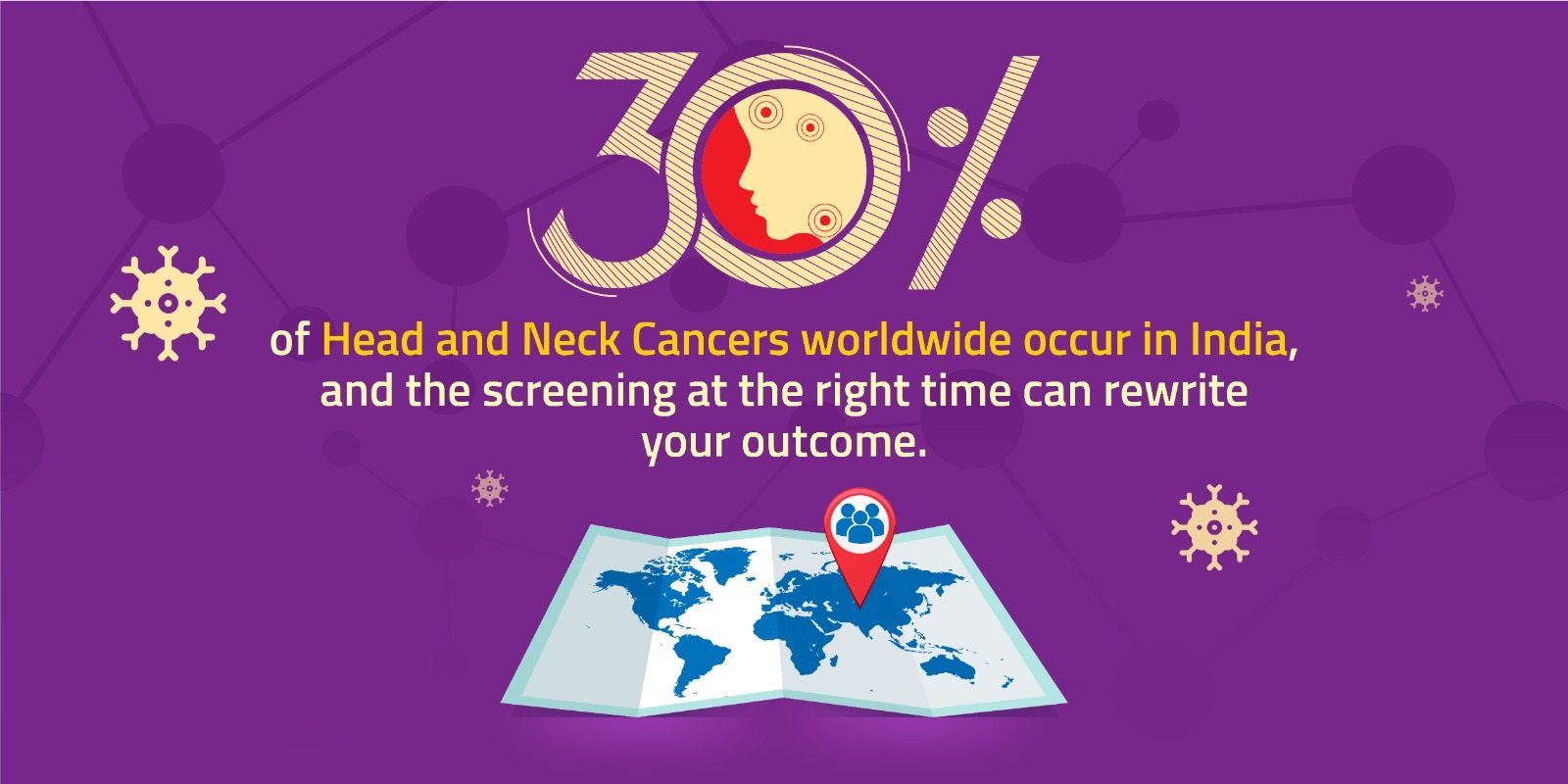
India accounts for almost 30% of all head and neck cancers globally. According to GLOBOCAN 2022 India fact sheet, head and neck cancer is the most common cancer in men and 4th most common cancer in women. It also has second highest cancer – related deaths attributed to it. The primary risk factors associated with head and neck cancer include tobacco use, alcohol consumption, human papillomavirus (HPV) infection (for oropharyngeal cancer), and Epstein-Barr virus (EBV) infection (for nasopharyngeal cancer). The high prevalence of head and neck cancers in India is strongly linked to high tobacco consumption rates, which include smoking and chewing. This higher incidence and mortality are due to lack of social or community awareness, inadequate screening programs, late – stage presentation, delay in diagnosis due to socio – economic factors and inaccessibility or poor adherence to evidence based standard treatment guidelines. Almost 60 to 80% of head and neck cancer cases in India present in advanced stages. The most frequent type of head and neck cancer in India is head and neck squamous cell carcinoma (HNSCC). In this blog, Dr. Dhruv Mehta who is a senior head and neck cancer specialist for the entire South Gujarat, will discuss about various risk factors for HNSCC
TOBACCO PRODUCTS:
Smoking tobacco – cigarettes, cigars and pipes are important risk factor for development of HNSCC. It is studied that a person who smokes one pack of cigarettes per day had a 13 – fold increase in risk of HNSCC. Also, if one started smoking before age of 18 years and if smoked for over 35 years, both increased the risk of HNSCC. Smokeless tobacco – chewing tobacco and snuff are associated with an increased risk of cancer of the oral cavity and pharynx. Exposure to environmental tobacco smoke (secondhand smoke) in both the workplace and home is associated with increased risk of tongue cancer in women.
ALCOHOL:
Alcohol consumption increases the risk of cancer in the upper aerodigestive tract. The risk of developing HNSCC is dependent on the dose of alcohol consumed. The risk of HNSCC increases 5-6-fold in a person who drinks more than 50 g/day alcohol as compared to person who drinks less than 10 g/day (one drink contains approximately 12 g of alcohol). Alcohol intake and tobacco smoking appear to have an interactive and multiplicative effect on the risk of developing HNSCC.
OPIUM:
Opium is an illicit substance derived from the poppy plant and is considered to be carcinogenic to humans when smoked or ingested in various forms. It specifically increases the risk of laryngeal cancer.
EBV INFECTION:
Epstein-Barr virus is a primary causative agent in development of nasopharyngeal cancer.
HPV INFECTION:
Human papillomavirus, primarily type 16, increases the risk of cancers of the base of tongue and the tonsils. HPV associated cancers are typically seen in younger men who are nonusers of tobacco and alcohol. HPV associated oropharyngeal cancer has a better prognosis and response to therapy than non-HPV associated disease.
IMMUNODEFICIENCY:
Patients infected with HIV have approximately two- to threefold increase in the incidence of HNSCC. Also, patients who have undergone a solid organ transplantation have an increased risk of HNSCC and patients who have received bone marrow transplant are at increased risk of oral cavity cancers.
BETEL NUT CHEWING:
Betel nut chewing is implicated in the development of not just HNSCC, but also hepatocellular and esophageal cancer. This habit is widespread in India especially in Gujarat region.
OCCUPATIONAL EXPOSURE:
Multiple other occupational or environmental toxins have been associated with increased risk of HNSCC. Some examples include but not limited to dry cleaning agent perchloroethylene, asbestos, pesticides, man-made mineral vitreous fibers (MMMF), polycyclic aromatic hydrocarbons, textile workers, wood workers, manufacturers of mustard gas, plastic and rubber products, naphthalene refiners, ethanol, sulfuric acid mist, leather and paint workers, automobile mechanics, construction workers (cement), farmers, and metal workers.
RADIATION:
Prior irradiation to head and neck region have been associated with increased risk of thyroid cancer, salivary gland tumors, HNSCCs, and sarcomas.
DIET:
Frequent consumers of preserved meats that contain high levels of added nitrites are at increased risk of nasopharyngeal cancer. Increased consumption of fruits and vegetables have protective effect over development of HNSCC
MOUTHWASH:
Using alcohol – based mouthwashes for more than 35 years and for more than one time a day is associated with increased risk of oral cavity and oropharyngeal cancers.
INFLAMMATORY TONGUE CONDITIONS:
Inflammatory tongue conditions including glossitis, atrophy or hypertrophy has been associated with an increase in risk of oral tongue cancer compared with normal population. In fact, 1 in 11 patients with tongue cancer had a preceding diagnosis of an inflammatory tongue condition.
OTHER RISK FACTORS:
Poor oral hygiene and periodontal disease have been linked with carcinoma of the oral cavity, while dental prostheses or poorly fitting dentures do not appear to be independent risk factors for the development of HNSCC.
CONCLUSION:
Knowledge of multiple risk factors by a head and neck cancer specialist and its application in clinical practice helps in early evaluation of head and neck region, early screening strategies, early diagnosis and targeted management of existent HNSCC. For further understanding of your risk of developing head and neck cancers, or any cancers, kindly contact Dr. Dhruv Mehta, a senior head and neck cancer specialist at SGHOC.
