Noticing a lump in the breast, pain, along with discomfort, & a hard texture means that cells in the breast have started to divide too fast, leading to irregular growth. When these changes continue to be unchecked by a breast cancer specialist in Surat, they reach out to other organs.

Breast cancer
Breast Cancer

Overview
Cancer is a disease in which some of the body’s cells become abnormal, grow or multiply uncontrollably, and then spread to other parts of the body. Breast cancer is the most common type of cancer in women in India, and India has the highest number of breast cancer deaths worldwide. In India, a woman is diagnosed with breast cancer every 4 minutes. This higher incidence and mortality are due to lack of social or community awareness, inadequate screening programs, late-stage presentation, delay in diagnosis due to socio-economic factors, and inaccessibility to breast cancer specialist in Surat or poor adherence to evidence-based standard treatment guidelines.
Clinical Presentation
Breast cancer is most often discovered as a painless mass in the breast by the patient. Sometimes, it is detected by a breast cancer specialist in Surat during clinical examination or during routine screening tests. However, in early stages, a patient may be entirely asymptomatic. Some other symptoms include nipple discharge; change in shape of the breast and/or nipple; dimples or puckering or red swollen skin of the breast, nipple, or areola; and a lump in the underarms. These symptoms can be caused by conditions other than cancer, so it is imperative to consult a breast cancer doctor in Surat for proper examination and diagnosis. Some people associate pain with cancer. Breast pain is not a common symptom of breast cancer, and pain usually occurs in later stages.
Diagnosis
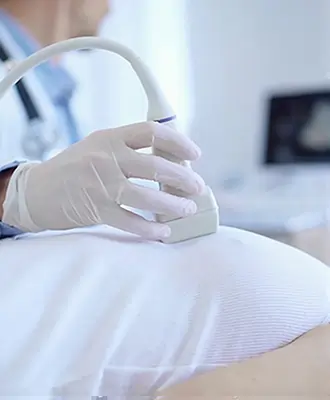
A detailed history, a good physical examination including a breast examination done by a trained breast cancer specialist in Surat, and a mammogram help in the diagnosis of breast cancer. Whenever the radiologist finds a spot suspicious of cancer in the mammogram, further tests like a biopsy would be required for confirmation of cancer. A biopsy may be excisional, where the entire lump is removed, or a core biopsy, where a part of the lump is removed via a wide-bore needle. This biopsy sample is then sent to an experienced oncopathologist who looks for cancer cells under a microscope. Once breast cancer is diagnosed by a breast cancer doctor in Surat, further radiological tests like CECT (contrast-enhanced CT), bone scan, or PET-CT may be done for staging. The right treatment for any cancer is dependent on staging. Staging is done to see whether the cancer is localized or has spread to other parts of the body.
Treatment From a Breast Cancer Doctor In Surat
Treatment of breast cancer by a breast cancer doctor in Surat is multidisciplinary and comprehensive and is dependent on the age, comorbidities, stage, grade, histological subtype, and various biomarkers like ER (estrogen receptor), PR (progesterone receptor), HER2, gene expressions (CanAssist), and molecular mutations like BRCA, PIK3CA, ESR1, PDL1, etc. The management of breast cancer includes:
- Surgery for early-stage, localized cancers and includes removal of the mass and axillary lymph nodes. Breast-conserving surgery, or lumpectomy, is an operation to remove the cancer and some normal tissue around it, but not the breast itself. It gives the best cosmetic outcomes but requires adjuvant radiation. Mastectomy is a surgery where the whole breast is removed. It includes modified radical mastectomy (MRM), simple (total) mastectomy, skin-sparing mastectomy (SSM), and nipple-areolar-sparing mastectomy (NSM). The kind of surgery one requires is dependent on numerous factors and is done after detailed discussion between the patient and the breast cancer specialist in Surat. Breast reconstruction can be done at the time of mastectomy or later.
- Radiation therapy it uses high-energy X-rays or other types of radiation like protons to kill cancer cells. It can be post-surgery or for pain relief in stage 4 cancers with painful bone metastasis.
- Chemotherapy medicines that kill cancer cells. It can be given before surgery to shrink the cancer and make it easier to remove. It can be given after surgery, depending on the stage, to prevent the growth or spread of the cancer. It is also given in stage 4 cancers where surgery and radiation are not considered.
- Endocrine, or hormone, therapy medicines used on hormone-sensitive cancers that are dependent on estrogen or progesterone for their growth. These medicines block the body’s ability to produce hormones or interfere with the effects of hormones on breast cancer cells. They can be given by the breast cancer doctor in Surat before the surgery to extremely old-age patients, after the surgery, and in hormone-positive metastatic cancers.
- Targeted therapy As the name suggests, targeted medicines attack only specific types of cancer cells, like HER2 positive (trastuzumab, pertuzumab, TDM1, tucatinib, lapatinib, etc.), ER/PR positive CDK4/6 inhibitors (palbociclib), PIK3CA inhibitors like alpelisib, and PARP inhibitors like olaparib.
- Immunotherapy aids the immune system in recognizing and attacking cancer cells.
Choosing the right therapy is crucial for improving the response rates and overall survival of the patient. However, there is no one therapy that fits in all cases. Precision medicine is the way forward, where evidence-based, personalized therapy can be given for the best outcomes after discussing with a breast cancer doctor in Surat.
Follow Up Care With a Breast Cancer Specialist In Surat
After completion of therapy in early-stage cancers, long-term follow-up with a breast cancer specialist in Surat is required to detect recurrences and second primary cancers and to look for late toxicities of chemotherapy and radiation. It is important to watch for symptoms that could signal the return of cancer—headaches, convulsions, shortness of breath, chronic cough, a new lump in the operated or opposite breast, bony pains, abdominal pain or distension, jaundice, weight loss despite adequate food intake, etc. It should be emphasized that even if cancer comes back or is detected in stage 4, the survival rate over 10 years is now over 75% with newer therapies.
Frequently Asked Questions
-
Q1What Is Breast Cancer?
-
Q2Symptoms Of Breast Cancer You Should Not Ignore
Breast cancer specialists warn people of breast cancer symptoms like changes in breast shape & skin getting thicker & puckered, lumps in breasts, constant pain, nipple inversion, bleeding & excess fluid.
-
Q3Is Breast Cancer Treatment Possible?
Breast cancer treatment is possible if diagnosed by a breast cancer specialist early.
- Stage I & II - Survival rates are high.
- Stage III - Survival in some cases with higher complexity.
- Stage IV- Complete recovery is not possible.
-
Q4How Many Stages Does Breast Cancer Progress In?
Breast cancer specialists in Surat & all over India have categorized it into 4 stages.
- Stage I- Cancer is confined only to the breast tissue.
- Stage II- Cancer moves further into the lymph nodes closer.
- Stage III- Cancer reaches the chest wall beyond the breast.
- Stage IV- Cancer reaches bones or other organs.