
Every year, around 47,000+ Indian women receive an ovarian cancer diagnosis, based on data from GLOBOCAN 2022. Because early signs tend to be subtle, detection often comes late – this delay happens since symptoms like bloating or pelvic ache rarely prompt immediate concern. Fullness during meals, stomach unease, reduced hunger, along with increased urination, are some of its symptoms. Though quiet at first, this cancer reveals itself through such symptoms that continue for prolonged durations.
Most women receive a diagnosis late because warning signs tend to be overlooked or confused with milder health issues. When detection happens early, results get better – especially if care begins with someone skilled in ovarian cancer treatment. Progress in surgical methods, drug treatments, gene analysis, and focused therapies has slowly increased how well patients live. Every patient at South Gujarat Hematology Oncology Center walks into treatment backed by global standards, guided personally by Dr. Dhruv Mehta – a leading expert in Surat known for skill and genuine attention in managing complex cases.
What Is The Life Expectancy For Ovarian Cancer Patients?
Once a diagnosis happens, questions around how long someone might live with ovarian cancer start to surface – not just for patients but also for those close to them. Outcomes differ sharply from one individual to another. Since these figures come from broad studies involving varied populations, pinning down a precise statistic is not possible. How things progress often ties closely to the spread of the cancerous cells, patient age at diagnosis, general physical condition, specific characteristics of the tumor growth, reaction to medical treatments, and the availability of advanced care. Medical professionals explain patient survival through the 5-year survival rate.
Survival Rates By Stages
Survival rate is determined by the stage of cancer and the state of the patient’s health at the time of diagnosis.
Early-Stage Ovarian Cancer
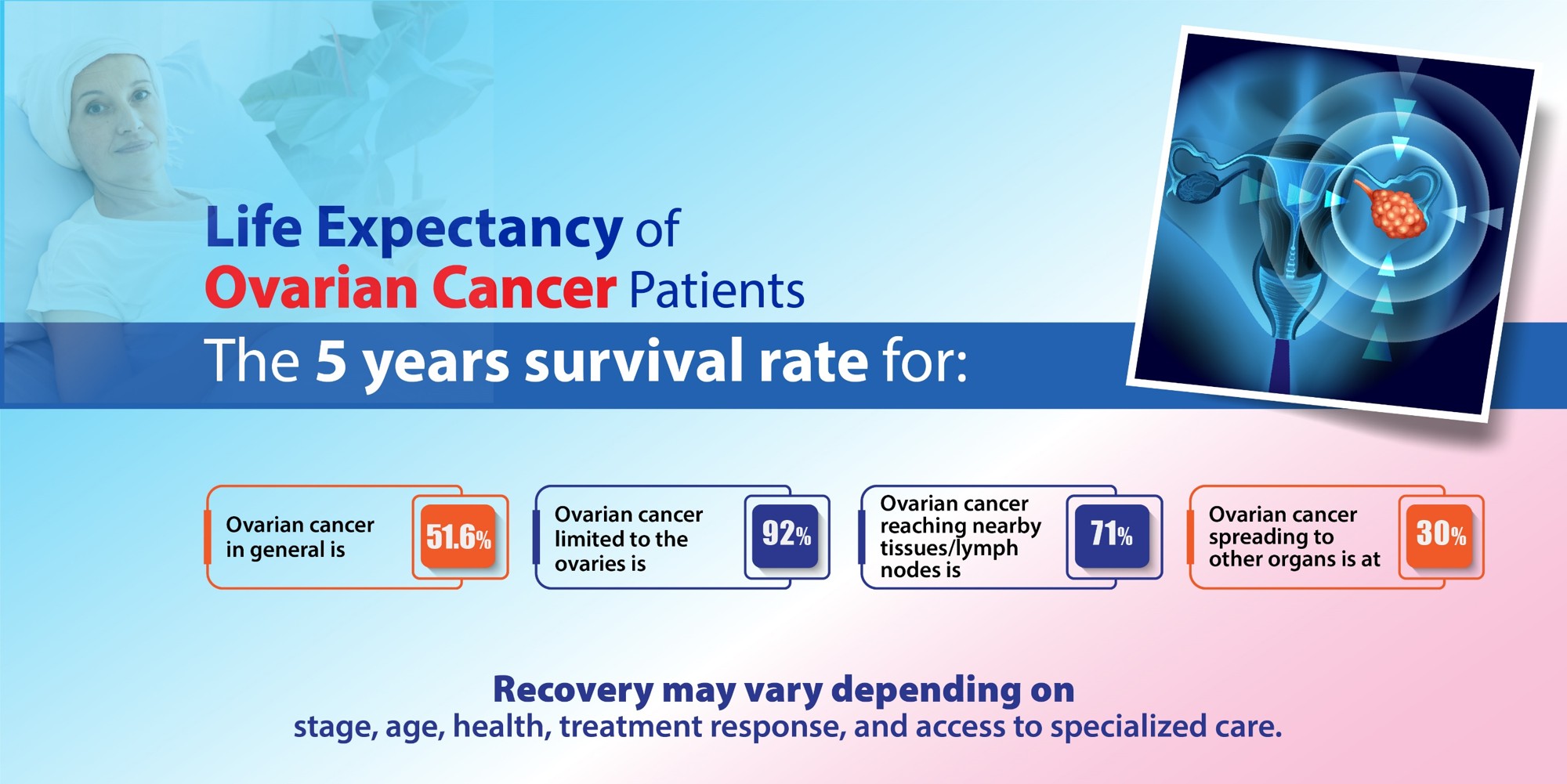
The chances of recovery and survival are at their highest when ovarian cancer is detected early, when it is limited only to the ovaries. Survival over five years sits around 90% in these cases. Responding positively to surgery along with chemotherapy is common among affected women. Quick treatment leads to successful recovery and a better quality of life.
Cancer Spread To The Pelvis
When cancer reaches surrounding tissues or pelvic lymph nodes, survival over five years drops to around 70%. Surgery is most commonly used with chemotherapy (pre/post surgery) and routine checkups.
Advanced Ovarian Cancer
It happens mostly that ovarian cancer is detected late due to subtle initial symptoms being overlooked. As the disease moves into areas like the abdomen, liver, or lungs, chances of surviving five years drop to 30%. Even then, treatment exists through continuous medical support, care, and monitoring with a multispeciality team and palliative care for symptom relief.
Factors That Affect Patient Survival
Age And Overall Health
Younger women and patients in good general health usually tolerate treatment better and often have improved outcomes.
Type And Grade Of Tumor
Not all ovarian cancer cases are the same in treatment outcomes. Low-grade tumors are slow in growth and respond well to treatment overall. Whereas high-grade tumors grow faster and require a more aggressive treatment approach. Recovery chances depend strongly on the type and grade of the tumor and its response to treatment.
Success Of Surgery
Surgery is one of the most commonly used methods of treatment for ovarian cancer patients. Surgeons aim to remove as much visible tumor as possible, known as optimal debulking. Patients with minimal cancer cells remaining after surgery generally have better survival rates if followed by chemotherapy.
Response To Modern Treatment
Platinum-based chemotherapy continues to serve as the primary approach for ovarian cancer care after the surgical approach. Patients carrying BRCA gene changes have seen better outcomes through newer agents like PARP inhibitors.
Importance Of Early Detection
In the current medical world, oncologists don’t have a dependable way to screen for ovarian cancer among the general population. Although tests like CA-125 blood tests and ultrasounds exist, they aren’t perfect – some tumors slip through unnoticed. If symptoms like persistent bloating, abdominal pain, reduced appetite, early satiety, or changes in urination continue past a few weeks – then consultation with a specialist like Dr. Dhruv Mehta becomes necessary. Earlier detection tends to support better results.
Conclusion
Many women continue their lives years after diagnosis and even decades, particularly if ovarian cancer is caught soon or responds positively to therapy. Though it remains a severe condition, progress has been made – survival chances now rise slowly thanks to better awareness, refined therapies, instead of older methods, and care delivered by multispecialty teams focused solely on such cancers.
Outcomes are shaped by many factors during treatment. Diagnosis without delay, followed by correct therapy and consistent monitoring under a skilled ovarian cancer specialist, often leads to better survival along with improved daily living. At South Gujarat Hematology Oncology Center (SGHOC), treatment forms around the person, not just the disease. With Dr. Dhruv Mehta leading, science guides each decision while newer methods offer the best patient recovery possible.
