
INTRODUCTION:
Globally, India accounts for almost 30% of all head and neck cancer cases. Based on the GLOBOCAN 2022 data for India, head and neck cancer cases are the most common among men and come in at 4th place among women. When it comes to the mortality rate, this cancer ranks 2nd. The most common head and neck cancer subtype diagnosed in India is head and neck squamous cell carcinoma (HNSCC). The high occurrence of this cancer in India is mainly linked to high tobacco use through smoking or chewing.
The primary risk factors associated with head and neck cancer include-
tobacco or alcohol use, being infected with human papillomavirus (HPV) for oropharyngeal cancer, or Epstein-Barr virus (EBV) for nasopharyngeal cancer.
Lack of awareness, diagnosis delay resulting from social/economic reasons, inadequate screening programs, and mainly poor adherence or inaccessibility to evidence-based standard treatment guidelines are the primary factors that contribute to higher development of this cancer as well as its death rate. 60 to 80% of head and neck cancer patients in India are diagnosed in advanced stages, where the cancer has metastasized.
Dr. Dhruv Mehta, a senior head and neck cancer specialist serving South Gujarat, discusses the latest treatment options available for recurrent and metastatic HNSCC (R/M HNSCC), with the help of this blog.
CHEMOTHERAPY:
Chemotherapy has been the most preferred therapy for R/M HNSCC for decades. However, the biggest drawback of chemotherapy is its adverse effects and long-term complications. Also, older adults and patients with multiple comorbidities were traditionally undertreated with chemotherapy because of the increased risk of complications. One of the major and most challenging side effects of chemotherapy treatment faced by patients is Chemotherapy-Induced Nausea and Vomiting (CINV). This side effect is related to the primary cisplatin-combination-based treatment for R/M HNSCC. With the advent of the Netupitant–Palonosetron (NEPA) fixed-dose combination, CINV rates in our clinical practice have gone down to less than 10%.
NEPA’s effects on CINV last for up to seven days, leading to improvement in quality of life (QOL), food intake and nutritional status, and reduced anxiety related to further chemotherapy cycles, allowing increased adherence, resulting in better treatment responses.
Another complication for taxane-based chemotherapy combinations is their effect on the peripheral nervous system and Hypersensitivity Reactions (HSRs). Now, nanoparticle technology and preservative-free paclitaxel have reduced the incidence of HSRs and neuropathy complications. Also, ready-to-use (RTU) formulations are now available, which decrease reconstitution errors during chemotherapy administration. A decade ago, reductions in hemoglobin, WBC, and platelet counts following chemotherapy frequently led to increased use of blood products and a higher risk of infections, often resulting in delays in chemotherapy cycles. With newer supportive medicines like Darbepoetin (to improve hemoglobin), Filgrastim (to increase WBC levels), and Romiplostim (to improve platelets), the administration of chemotherapy has become safer than ever.
IMMUNOTHERAPY:
Immunotherapy is an advanced treatment for head and neck cancer patients. Immunotherapy stimulates the body’s immune system, enabling immune cells to recognize and destroy cancer cells more effectively. Unlike chemotherapy and radiation therapy, it doesn’t directly attack cancer.
Chemotherapy and radiation therapy, while targeting cancerous cells, also affect healthy ones, causing hair loss, vomiting, and fatigue. Immunotherapy is a precise and targeted treatment; as a result, it is generally associated with fewer side effects related to healthy cell damage. Immunotherapy can also produce durable remissions in selected patients. Numerous immunotherapy molecules are now approved for use for first-line treatment of R/M HNSCC.
TARGETED THERAPIES:
Targeted therapy targets molecules responsible for cancer growth instead of the abnormal cancer cells directly. This approach targets molecules like proteins, receptors, and certain enzymes related to cancer subtypes. For certain subtypes wherein these molecules contribute to growth, targeted therapy uses drugs to block them and limit them. This indirect approach allows targeted therapy to specifically eliminate cancer cells and limit damage to healthy cells.
Numerous molecular pathways can be targeted — EGFR, FGFR, PI3K, MET, and CDK4/6. Currently, cetuximab and afatinib targeting EGFR are approved for use in R/M HNSCC. Today, numerous molecules for targeted therapy are in phase I and II clinical trials.
ADOPTIVE CELL THERAPIES:
Adoptive cell therapies involve collecting, expanding, and genetically modifying our body’s various immune cells with various Chimeric Antigen Receptors (CARs) for more focused elimination against cancer cells.
In present times, popular tumor cell therapies include-
- Chimeric Antigen Receptor-Modified Natural Killer (CAR-NK) Cells
- Chimeric Antigen Receptor-Modified Macrophages (CAR-M)
- Chimeric Antigen Receptor T-Cell Therapy (CAR-T)
- T-Cell Receptor Modified T-Cells (TCR-T)
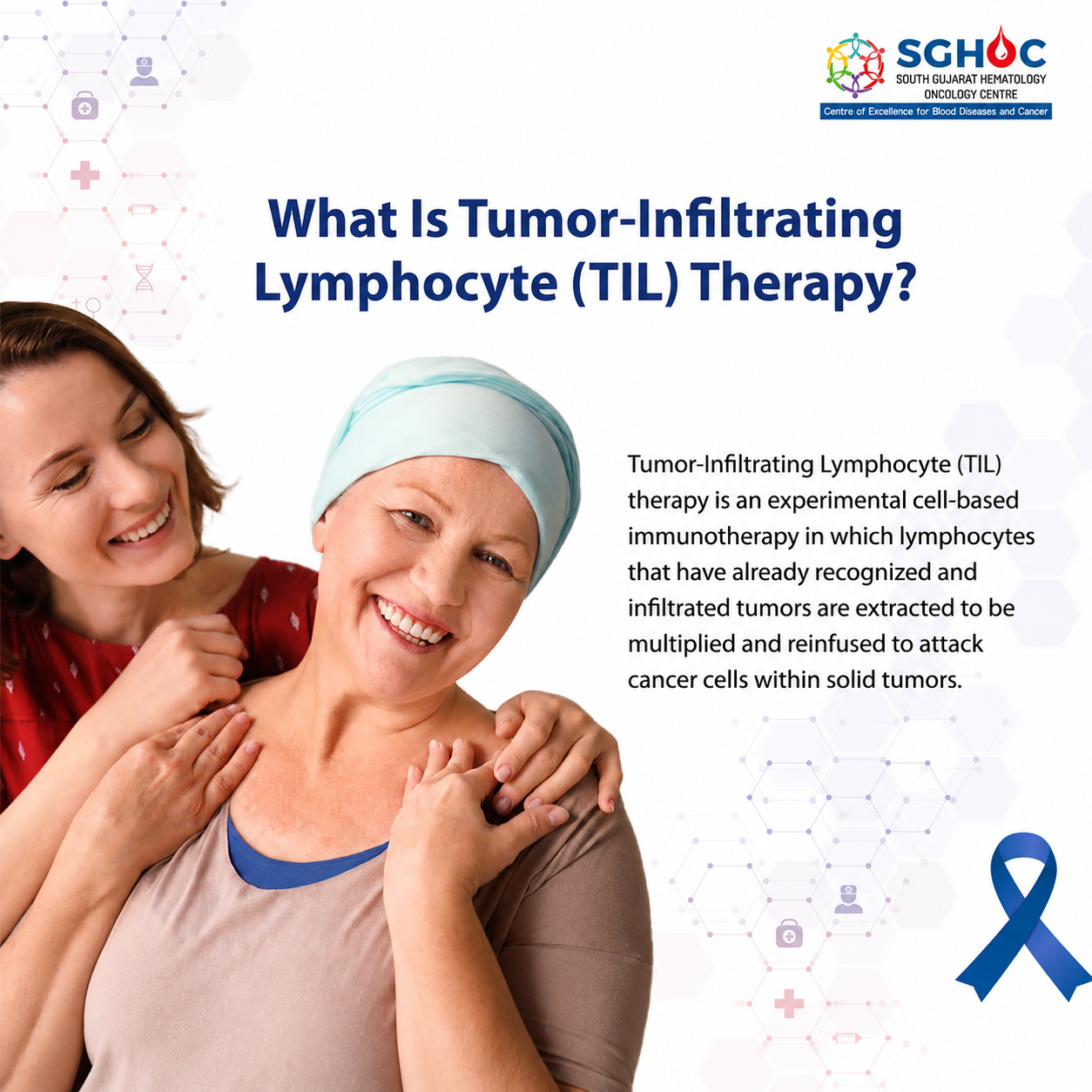
- Tumor-Infiltrating Lymphocytes (TIL)
These are highly individualized therapies currently under research for R/M HNSCC. Early clinical data show positive effects in chemotherapy/immunotherapy-refractory cases. Several therapeutic vaccines using modified vaccinia virus, HPV-based platforms, or HSV-1 vectors are also under clinical investigation for R/HNSCC.
CONCLUSION:
Although outcomes remain poor for R/M HNSCC, which is currently bad for patients who have progressed on immunotherapies and targeted therapies, ongoing clinical trials investigating several promising therapies offer hope for improved outcomes in the future. Immunotherapy and targeted therapies, when started early in R/M HNSCC, have shown excellent results in patients.
For head and neck cancer, therapy is not a one-size-fits-all solution. That’s why choosing the right therapy is crucial for improving the response rates and overall survival of the patient. At South Gujarat Hematology Oncology Centre, Dr. Dhruv Mehta — a renowned head and neck cancer specialist — personalizes treatment for every patient based on the cancer stage, primary tumor site, overall health, comorbidities such as diabetes, hypertension, and heart disease, and the specific subtype of head and neck cancer.
