
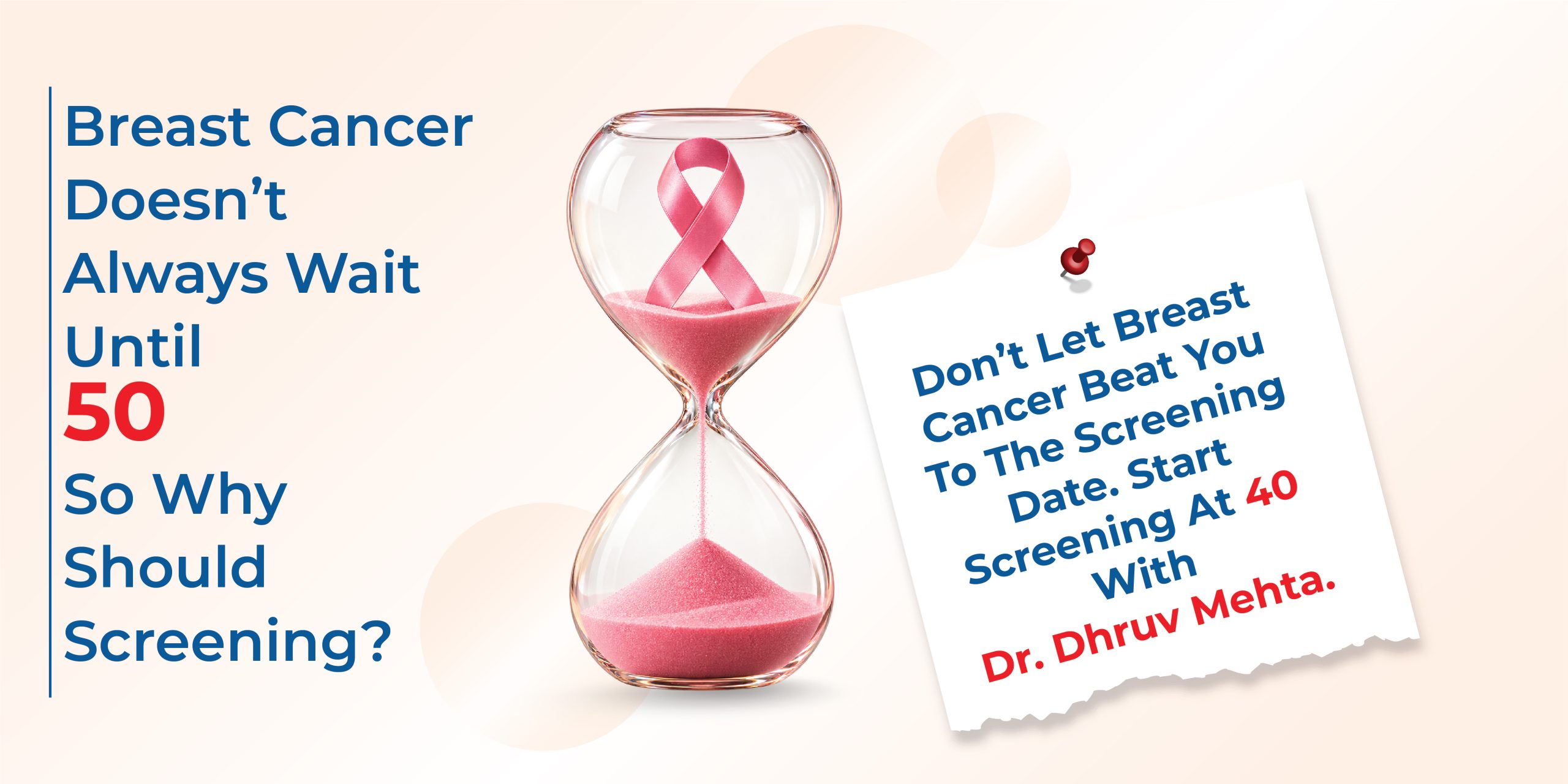
Screening tests like mammography can help in identifying the presence of breast cancer. But it is important to know when to start getting screening tests and which tests are right for you. A lot of international guidelines suggest getting a mammogram from the age of 50. But according to Dr. Dhruv Mehta, a breast cancer specialist, screening should start at the age of 40, as Indian women tend to get breast cancer at least a decade earlier than women in the West.
When and Which Tests to Consider
● From the age of 20 years — Self-breast Examination [SBE] — Monthly
● From the ages 30 to 39 years — Self-breast Examination [SBE] with Clinical Breast Examination [CBE] — Every 2-3 years is recommended with ultrasound of the breast only if indicated.
● From age 40 onwards — Sonomammography is recommended along with Self-breast Examination [SBE] and Clinical Breast Examination [CBE] — Annually or Biennially.
Who Is at Higher Risk?
● Patients with a family history of breast, ovarian, and prostate cancer.
● Those with genetic mutations such as:
- BRCA1
- BRCA2
- PALB2
- TP53
- PTEN
● Atypical Ductal Hyperplasia [ADH] present in previous breast biopsies or Lobular Carcinoma-in-situ [LCIS].
● Prior history of Chest Wall Radiation [e.g., for Mediastinal Hodgkin Lymphoma]. For people with these factors, screening should begin by age 30 or 10 years before the age at which the youngest affected family member was diagnosed. For people under 40 years of age, to reduce the exposure to radiation and the likelihood of dense breast tissue, breast MRI is recommended as a screening tool.
Tips For Patients Undergoing Mammography
Since the mammography procedure is slightly painful, it is better to get it done 7-10 days after the menstrual cycle starts. During this time frame, estrogen levels drop, and breast tissues are less swollen and less sensitive, resulting in less pain during compression and clearer images. For postmenopausal women, screening mammography can be scheduled on any day of the year. It is advisable to refrain from applying deodorants, perfumes, body lotions, or powders on the chest and underarms during the examination since such products may contain metal particles, resulting in shadows resembling calcium deposits. Dress comfortably and bring previous mammography films, CDs, or biopsy reports if available for comparison with results. If you are pregnant/suspect pregnancy/are breastfeeding/have implants, then inform the technician before starting with the procedure.
Conclusion
Cancer screening is a significant aspect of health supervision that aids in the early diagnosis of cancer. Screening mammography is usually recommended for women who do not have any symptoms associated with abnormalities in the breasts. Inaddition, in case of occurrence of any of the following, it is recommended to consult
Dr. Dhruv Mehta for screening mammography:
● A painless lump or thickening in the breast or armpit.
● Nipple discharge, especially when one-sided.
● Nipple changes like inversion or retraction.
● Puckering, dimpling, redness, or an orange-peel-like texture of the breast skin.
● Persistent flaking around the areola and localized redness. In general, if you are 40 or older, have a family history of cancer, or notice any changes in your breasts, then you need to consult Dr. Dhruv Mehta, the best breast cancer specialist in Surat, for personalized screening and further guidance.
